Museums
Reading Museum
The town's free civic museum, home of the Victorian full-size replica Bayeux Tapestry and the finest Silchester Roman collection.
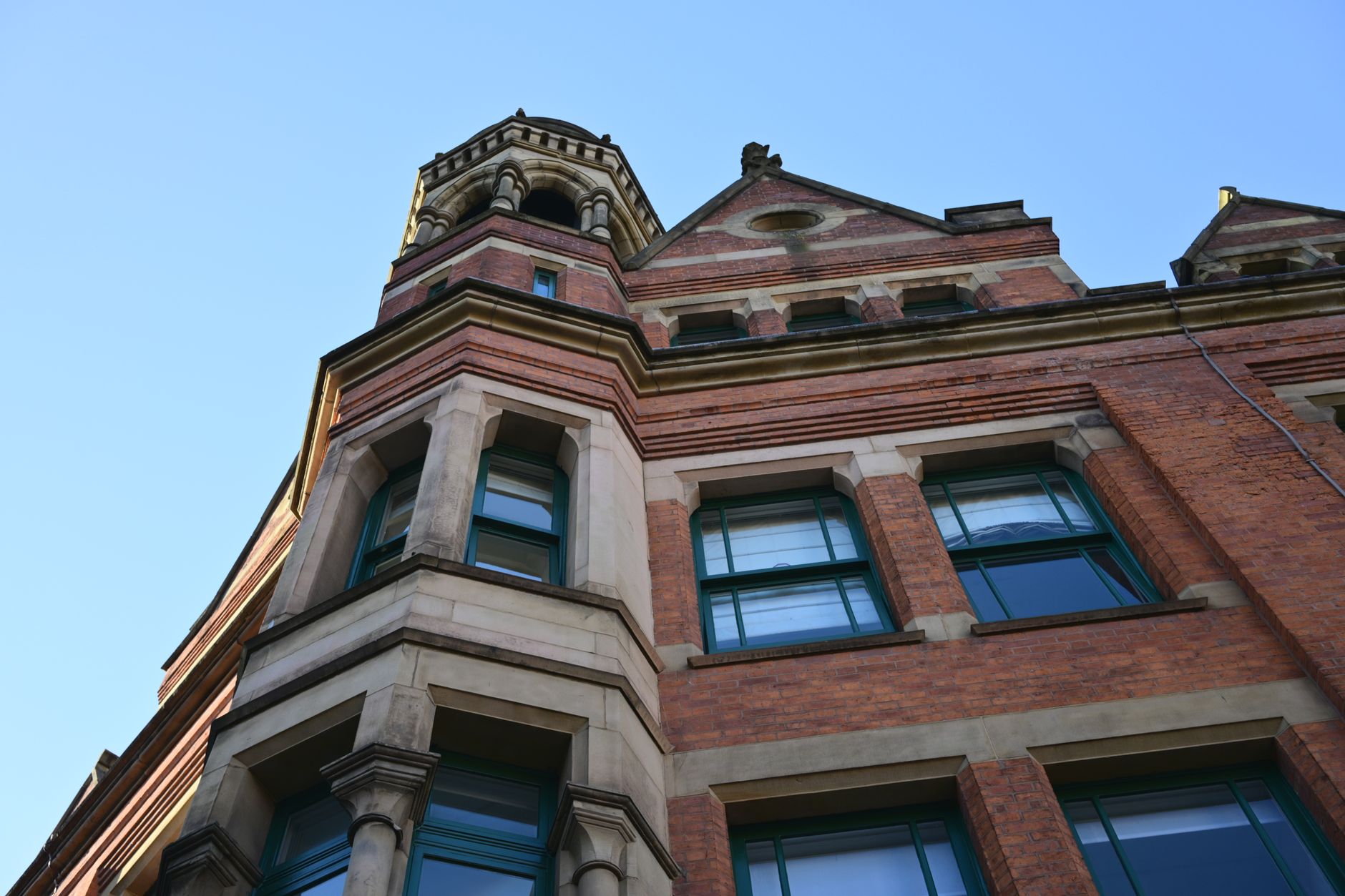
Reading Museum occupies the upper floors of the Victorian Town Hall on Blagrave Street, five minutes from the station. It opened in 1883 and holds three collections of real national importance: the finest archaeological finds from the Roman town of Silchester (Calleva Atrebatum) 10 miles south; the Huntley & Palmers biscuit archive, tracing the world's largest biscuit factory that once employed a fifth of the town; and the extraordinary Britain's Bayeux Tapestry, a full-length Victorian embroidered replica of the 11th-century original, made in 1885 by 35 women of the Leek Embroidery Society.
The Silchester Gallery reconstructs Roman civic life with mosaics, an eagle statuette, painted wall plaster and personal items excavated between 1890 and 1909. The Bayeux Tapestry Gallery is a single long room where you can walk the entire 70-metre narrative at eye level (something you cannot easily do with the original in Bayeux). The Huntley & Palmers Gallery has original biscuit tins from every decade including the famous Coronation, Windsor Castle-shaped and airship tins. Upstairs, changing exhibitions cover the town's more recent story, from the Reading Festival to South Asian migration.
Entry is free, always. Come on a weekday afternoon when the school groups have left. The Sun Street entrance takes you straight up to the galleries; the Blagrave Street entrance goes via the visitor centre and shop. Combine easily with Reading Abbey Ruins (three-minute walk east through Forbury Gardens) for a full local-heritage morning. The cafe is small and closes at 15:30; better to eat on King Street. Free wifi throughout, and free family activity packs at the front desk on weekends.
Beyond the famous three, there are four smaller spaces worth knowing about before you plan your route. The Reading Abbey Gallery, opened in 2018 when the Abbey Quarter reopened to the public, holds carved stonework from the great Cluniac abbey founded by Henry I in 1121 and gives you the context you need for the ruins outside; give it ten minutes and walk straight to them afterwards. The Story of Reading gallery covers the three Bs the town was built on, beer from Simonds, bulbs and seeds from Suttons, and biscuits from Huntley & Palmers, plus Oscar Wilde's imprisonment at Reading Gaol. Green Space, the local natural history room, is small and best skipped unless you have children under eight. The Sir John Madejski Art Gallery hosts the touring shows, so check what is on before you climb the stairs.
Getting there is the easy part. Reading Station sits at the top of Blagrave Street: leave by the main southern exit, walk downhill for five minutes and the Town Hall is on your left, opposite St Laurence's Church. Fast Great Western trains from London Paddington take 23 to 30 minutes; the Elizabeth line does the same journey in about 55 minutes for noticeably less money, and South Western Railway runs in from Waterloo in a little over an hour. Almost every Reading Buses route, including the frequent purple 17, stops on Friar Street or Broad Street, both under five minutes away, and single fares are capped at £3. Drivers should use the Q-Park on Garrard Street, three minutes on foot, or the Oracle car parks by the river; budget roughly £3-5 for two hours. Do not try to park on Blagrave Street itself.
Costs are refreshingly simple: nothing. The permanent galleries, the family activity packs, the Bayeux audio guide and the wifi are all free, there is no timed ticket and no booking fee, and the only money you will be asked for is the donation box by the desk, where £3-5 is a fair contribution. The exception is a ticketed touring exhibition in the Sir John Madejski Art Gallery, which typically runs £5-8 for adults with concessions a pound or two lower. There is no combined ticket with anything else, because everything you would combine it with is free too: Reading Abbey Ruins, the Museum of English Rural Life on Redlands Road and the Roman walls and amphitheatre at Silchester all cost nothing. Save your budget for lunch and the shop, where postcards and Huntley & Palmers reproductions start at a few pounds.
Timing matters more than most free museums, because the doors shut at 16:00 sharp and the galleries start clearing before that. Arrive by 15:00 at the latest if you want the full 70 metres of tapestry plus Silchester. Term-time mornings, roughly 10:00 to 12:00, belong to school parties in the Silchester and Bayeux galleries; Saturday 11:00-13:00 is the family peak; Tuesday and Wednesday afternoons are close to empty. February half-term, Easter and the summer holidays bring free craft activities and a much louder building. Monday closure catches people out all year, and so does the bank holiday rule, which means the museum is shut on the August bank holiday Monday when Reading Festival is emptying out of town. Winter is the season this place earns its keep: a warm, free, dry 90 minutes when the Thames path is grey and sodden.
It suits families with children roughly six to eleven best, especially at weekends when the clipboard packs are out, and it suits anyone with a rainy afternoon and no plan. Wheelchair users and buggies should use the Blagrave Street entrance, where there is level access and a lift to all the galleries; the Sun Street stairs are quicker but not step-free. Teenagers usually give it 40 minutes and most of that in the biscuit tins. If you have a one-hour gap before a train, do the Bayeux gallery only, allow 30 minutes, add a fast loop of Silchester, and you are back on the platform with time to spare. Anyone hoping for a big regional art collection, dinosaurs or interactive science should go elsewhere; this is a town museum with three superb specialisms, not a day out on the scale of Oxford or London.
The honest caveats: the tapestry is a copy, and although it is a magnificent, painstaking one, the Victorian embroiderers modestly clothed several figures the Norman original leaves naked, so it is not a perfect facsimile. The Silchester Gallery is one room, not a Roman wing, and the bronze eagle that inspired Rosemary Sutcliff's The Eagle of the Ninth is smaller than the legend suggests. The building is a working Victorian town hall, signage is patchy, and the cafe genuinely does close at 15:30. Nobody queues here, whatever you have read. Fold in what is nearby instead: Forbury Gardens and the Maiwand Lion two minutes east, Reading Abbey Ruins three minutes, the Abbey Gateway and the exterior of Reading Gaol about eight, the Oracle and the Kennet waterfront seven, and the Museum of English Rural Life a 25-minute walk south, also free.
Hours & entry
Always free
Tue-Sat 10:00-16:00 · Sun 11:00-16:00 · Closed Mon and bank holidays
What to see
{'what': "Britain's Bayeux Tapestry, the full 70-metre Victorian replica", 'where': 'Bayeux Gallery, second floor'}
{'what': 'The Silchester bronze eagle, 2nd century AD', 'where': 'Silchester Gallery, ground floor, central case'}
{'what': 'Huntley & Palmers Coronation biscuit tin, 1902', 'where': 'Biscuit Gallery, first floor'}
Tips from the ground
Free family activity packs (with pencils and clipboard puzzles) from the front desk on Saturdays and Sundays.
Tuesdays and Wednesdays are quietest; Saturday 11:00-13:00 is busiest.
The Bayeux gallery is best with the free audio guide — QR code on the wall at the entrance.
Questions, answered
Ticket price?
Free. No charge for the permanent galleries; occasional touring exhibitions may charge £5-8. That covers the Bayeux, Silchester, Huntley & Palmers, Reading Abbey and Story of Reading galleries, the weekend family activity packs, the QR audio guide and the wifi. There is a donation box by the front desk where £3-5 is a fair contribution to a council-run museum. Concessions on ticketed touring shows usually run a pound or two below the adult rate. The only other spending is the shop and the small cafe.
Free windows?
Always free, all opening hours. There is no first-Sunday scheme, no timed free slot and no ticket to collect, because Reading Museum has never charged for its permanent collections. Walk in at 10:00 on a Tuesday or 15:00 on a Sunday and the price is identical. The single exception is a ticketed exhibition in the Sir John Madejski Art Gallery, at £5-8, which is clearly signed at the entrance. If money is the deciding factor, this is the strongest free hour in central Reading.
How long?
1-2 hours to see all three main galleries properly. Budget roughly 30-40 minutes to walk the full 70 metres of the Bayeux replica with the audio guide, 20 minutes for Silchester, and 15-20 for the biscuit tins. Add another 20 if you want the Story of Reading and Abbey galleries. Under real time pressure, the tapestry alone is a satisfying 30 minutes. If you are making a half-day of it, allow a further 30 minutes for Reading Abbey Ruins, three minutes' walk east.
Closed days?
Monday every week. Also closed 25-26 December and 1 January. It shuts on bank holidays too, which surprises visitors on Easter Monday, the early May holiday and the August bank holiday Monday when Reading Festival crowds are leaving town. Otherwise it runs Tuesday to Saturday 10:00-16:00 and Sunday 11:00-16:00. The doors close at 16:00 firmly, so arrive by 15:00 to do the tapestry justice, and remember the cafe stops serving at 15:30.
Booking?
No booking. Walk in. There are no timed entry slots, no online ticket and no queue on any normal day, including summer Saturdays. Groups of ten or more and school parties should contact the museum in advance so staff can stagger you through the Silchester and Bayeux rooms, which are the two narrowest spaces. A ticketed touring exhibition in the Sir John Madejski Art Gallery may sell tickets online or at the desk; everything else is simply open. Turn up, sign nothing, go upstairs.
Nearest station?
Reading Station, 5 min walk south down Blagrave Street. Leave by the main southern exit and the Town Hall is on your left, opposite St Laurence's Church. Fast trains from London Paddington take 23-30 minutes, the Elizabeth line about 55 minutes for less money, and South Western Railway reaches Waterloo in just over an hour. Buses, including the purple 17, stop on Friar Street and Broad Street, both under five minutes away, with single fares capped at £3. Drivers should use Q-Park Garrard Street, three minutes on foot.
Doing good is the business: every booking through Stay Reading funds one verified tonne of carbon removal — same room, same price, no markup.
Start your search