The walk in shape
This is a linear-then-loop walk that starts at Reading station, spends 90 minutes in the Abbey Quarter, dips south to the Oracle and Kennet, then comes back via the Museum in the Town Hall. Total distance 3.4 miles, total time 2h 45min to 3h 15min depending on how long you spend inside buildings. Suitable for anyone who can walk that far on flat pavement — there are no hills, no stiles, and every stop has a bench within 30 metres. The best months are April to October when the Abbey Ruins and Forbury Gardens are fully accessible.
The walk works because Reading's history is genuinely stacked in one square kilometre. Henry I is buried under a car park here (his abbey was dissolved in 1539); Jane Austen went to school on Abbey Gate Street; Oscar Wilde was imprisoned in the gaol next door; and the world's first commercial biscuit factory operated 300 metres south of the ruins. You can see all of it on foot in an afternoon, and none of the buildings charge admission.
Stops 1-3: Station, Forbury Gardens, Maiwand Lion
Start at Reading station's south exit. Cross Station Hill (crossing at the lights, not the jaywalk everyone does) and enter Friar Street. It's 200 metres to Forbury Road, where you turn right into Forbury Gardens. This is stop one: the gardens were laid out in 1855 on the old abbey precincts, and the bandstand still holds free Sunday concerts May to September at 15:00. Give it 15 minutes.
In the middle of the gardens is the Maiwand Lion, a cast-iron lion 31 feet long commemorating the 329 men of the Berkshire Regiment killed at Maiwand in Afghanistan in 1880. It's the largest cast lion in the world by weight (16 tonnes) and the reason locals call the pub next door the Lion. From the lion, walk east to the Abbey Gateway — the medieval gate where Jane Austen boarded at the Abbey School from 1785-86. The gate itself is 12th century, restored in 1861 after collapsing.
Stops 4-5: Abbey Ruins and St James's
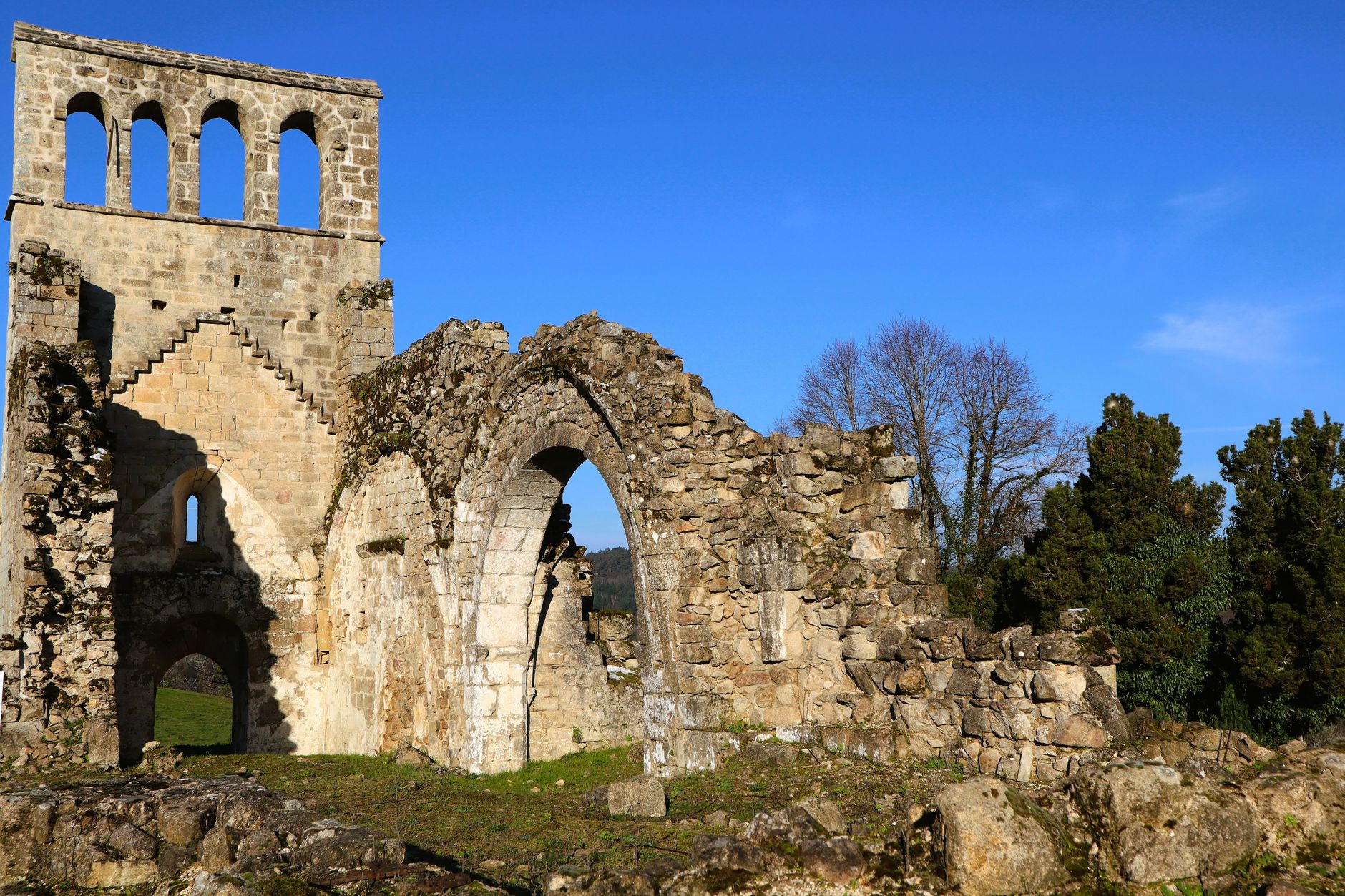
Through the gateway you enter the Abbey Ruins proper. Reading Abbey was founded by Henry I in 1121 and was one of the wealthiest monasteries in England until the Dissolution in 1539. The ruins reopened in 2018 after a £3.1 million conservation project, and you can now walk the full length of the church, chapter house and dormitory undercroft. Information boards are honest about what's known and what's guessed. Henry I is buried somewhere under the car park to the north, but nobody has found the exact spot despite three archaeological digs since 2015.
Immediately south of the ruins is St James's Catholic Church, built 1837-40 by Pugin using stone salvaged from the abbey. It's the only functioning Pugin church still in Catholic use in the Thames Valley, and it's open weekday mornings 09:00-12:00 if you want to see inside. From here, walk east through the ruins and out onto Forbury Road. This part of the walk has taken about 60 minutes; you’re a third of the way through.
Stops 6-7: Reading Gaol and the Kennet
Cross Forbury Road at the lights and you’re at Reading Gaol. Oscar Wilde was imprisoned here from 1895-97 and wrote De Profundis in cell C.3.3. The gaol closed in 2013 and has been the subject of a decade-long campaign to buy it for the public — as of 2026 it's still empty and awaiting a decision. You can walk the perimeter (Forbury Road, then Gasworks Road, then the towpath) in about ten minutes; the Banksy that appeared on the outer wall in 2021 has been protected behind perspex.
From the gaol, drop down to the Kennet towpath at Blake's Lock. This is where the town's industrial history lived — the gasworks, the brewery, the biscuit factory sidings. Walk west along the north bank of the Kennet for 400 metres to Chestnut Walk. The Riverside Museum at Blake's Lock is free, small (30 minutes) and specifically about the town's waterways. Its Huntley & Palmers displays include original tins and the workforce photographs from the 1900s.
Stops 8-9: Oracle riverside and Minster Church
Continue west along the Kennet through the Oracle shopping centre's riverside terrace. The Oracle opened in 1999 on the site of the old Simonds brewery, and the riverside walk between High Bridge and Bridge Street is the town's most-used outdoor space — coffee, ice cream, benches, and on summer evenings, buskers. Twenty minutes here including a coffee break. The chain options are the obvious ones; the better independent is Anonymous Coffee on Bridge Street, up the stairs from the water.
From High Bridge, walk north on Duke Street and turn left into St Mary's Butts. St Mary's Minster is the parish church of Reading, and predates the abbey — there's been a church here since around 979 AD. The current building is a patchwork of 12th, 15th and 16th century work, with a checkerboard flint-and-stone tower that's the oldest visible masonry in central Reading. Open most weekdays 10:00-15:00, and worth 15 minutes if it is.
Stops 10-11: Town Hall Museum and back to the station
From St Mary's, walk east up Broad Street and turn left into Blagrave Street. The Reading Museum is in the Town Hall, free, and holds two things you can’t see anywhere else in the world. The first is the full-size Britain's Bayeux Tapestry replica, made in 1885 by 35 women of the Leek Embroidery Society — it's the only complete copy of the Bayeux Tapestry in existence and it lives in a single long gallery on the first floor. The second is the Silchester Gallery, holding the finds from the excavation of Calleva Atrebatum, the Roman town six miles south of here.
Give the museum 45 minutes minimum; an hour is better. From the museum, it's a 400-metre walk back to Reading station via Blagrave Street. Total walking time from start to finish, without any stop lasting more than 20 minutes over the recommended, comes to about three hours. Add lunch and it's a full half-day.
Where to eat on the route and where to sleep
Lunch options along the walk, in order of appearance: the Lion on Forbury Road (pub food, £14-18, terrace overlooking the gardens); Kungfu Kitchen on Queen's Walk (Chinese, £11-14, quick); Cafe Yolk on King Street (brunch, £10-13, best for a mid-morning break); the Sun Inn on Castle Street (traditional pub, £13-16, if you’re doing the walk anticlockwise). Coffee stops: Workhouse on King's Road, Anonymous on Bridge Street, or Compound on Bridge Street for pastries.
For a hotel on the route itself, the Roseate on the Forbury (£180-220) is literally on stop three. Malmaison at the station (£140-170) is 100 metres from the start. Both let you drop bags before 15:00 by arrangement. If you want cheaper and don’t mind a five-minute walk out, the Premier Inn Caversham Bridge (£75-95) is across the Thames and adds a river view to the deal, which is worth it in warm months.
Questions, answered
Is this walk suitable in the rain?
Mostly yes — the Abbey Ruins and Forbury Gardens are the exposed sections but you can shorten them to 20 minutes each. The Riverside Museum, Reading Museum and St Mary's are all indoor. The Kennet towpath section between Blake's Lock and the Oracle is exposed for 400 metres; carry an umbrella and it's fine.
Can I do this walk as a self-guided audio tour?
Yes — Reading Museum runs a free Abbey Quarter audio tour you can download from their website, which covers stops 1-5 of this route in about 45 minutes. For the wider walk you’re on your own with the information boards, which are actually good and were rewritten as part of the 2018 restoration.
What if I only have 90 minutes?
Do stops 1-5 only: Forbury Gardens, Maiwand Lion, Abbey Gateway, Abbey Ruins and St James's. That's the historical core, all within a 400-metre radius, and it takes 90 minutes without rushing. Save the museum and the Kennet section for a return visit.
Doing good is the business: every booking through Stay Reading funds one verified tonne of carbon removal — same room, same price, no markup.
Start your search